The systematic study of poker tells has a surprisingly short formal history. For most of poker’s existence, tell-reading was passed down informally between players — anecdotal, inconsistent, and largely unverified. The transformation of tells from folk wisdom into something approaching a genuine discipline happened through the work of a small number of researchers and practitioners over the past five decades. Understanding this history makes the current state of poker tell knowledge more useful and helps separate what has been genuinely validated from what remains speculation.
Poker Tells History — Mike Caro and the Foundation
The most important figure in the formal study of poker tells is Mike Caro, whose Caro’s Book of Poker Tells — first published in 1984 — was the first systematic attempt to catalogue and classify tell behavior. Caro spent years observing live poker players and documenting patterns that appeared to correlate reliably with hand strength.
Caro’s central insight was what he called the “weak means strong, strong means weak” principle: players with strong hands often act weak to encourage action, while players with weak hands often act strong to discourage it. This theatrical tendency — which Caro called “Hollywood” — forms the foundation of false tell theory and explains why many seemingly obvious physical displays should be interpreted in reverse.
His catalogue of tells covered body language, chip handling, verbal statements, and betting patterns. While subsequent research has refined and in some cases revised specific claims, the structural framework Caro established — classifying tells by type, analyzing the motivation behind behavior, and distinguishing involuntary from voluntary signals — remains the foundation of the field.
Zachary Elwood and the Modern Era of Poker Tells
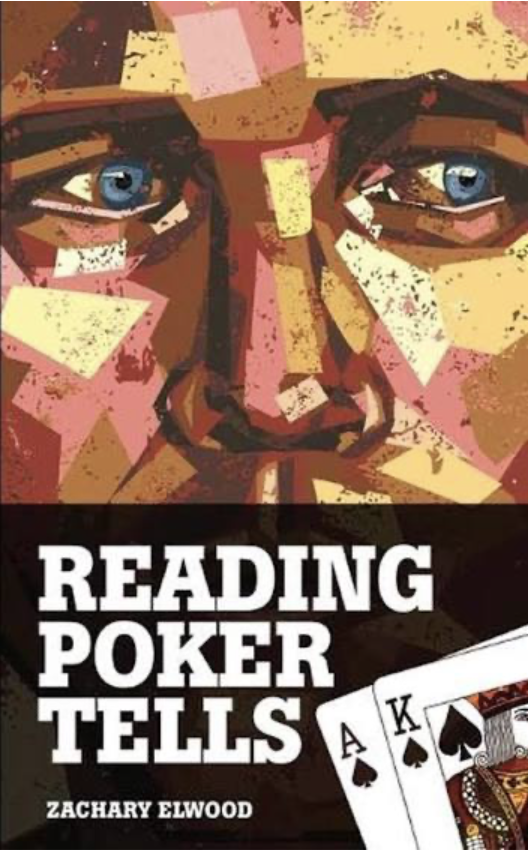
The next major contribution came nearly three decades later. Zachary Elwood’s Reading Poker Tells, published in 2012, applied more rigorous methodology to the field. Elwood spent eight months studying hours of televised poker footage before writing his follow-up Verbal Poker Tells in 2013 — a focused analysis of speech patterns during hands.
Elwood’s contribution was specificity. Where Caro’s work covered a wide range of tells at varying levels of reliability, Elwood focused on identifying the most reliable tell categories and explaining precisely why they work. His analysis of verbal poker tells — showing that statements designed as obstacles to opponent action almost always indicate weakness — provided a theoretical framework rather than just a list of patterns.
Furthermore, Elwood was careful to distinguish tells that work reliably across populations from tells that are highly individual and require extensive observation to establish. This distinction between population tells and individual tells is one of the most practically important contributions to tell theory and is now central to how serious players approach tell-reading.
Famous Televised Poker Tell Moments
Several televised poker moments became reference points for public understanding of tells, though not all of them represent genuine tell-reading in practice.
The most culturally significant fictional portrayal — Teddy KGB’s Oreo-eating tell in the 1998 film Rounders — is more dramatic invention than realistic portrayal. In real poker, tells are rarely so obvious or so consistently tied to specific prop behaviors. Nevertheless, the scene captured public imagination and significantly increased awareness of tells as a poker concept.
In real televised poker, some genuinely significant tell moments have been captured. Phil Hellmuth and Daniel Negreanu are frequently credited with tell-reading abilities in commentary, though in practice much of what appears as tell-reading is pattern recognition and hand-reading based on betting action rather than physical observation.
The development of poker as a televised sport — with hole card cameras revealing the truth behind player behavior — did create a valuable educational resource. Researchers like Elwood used this footage extensively to verify whether observed behaviors actually correlated with hand strength shown at showdown. This verification process moved tell research from anecdote toward something more empirically grounded.